What Industrial Problems Can Dongguan Jewshin Intelligent Machinery Solve?
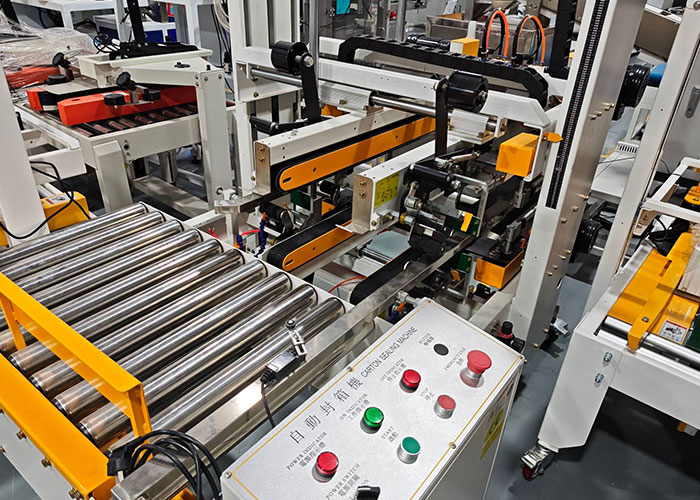
Dongguan Jewshin Intelligent Machinery helps manufacturers improve production efficiency, reduce labor dependence, increase product consistency, and support flexible manufacturing through customized automation equipment. Its machinery solutions address common industrial requirements such as high-speed production, precision control, material handling, quality stability, and factory expansion. With automation technologies designed for industries requiring reliable output, manufacturers can improve productivity by 30%–70% while reducing manual processing errors and production interruptions.
Manufacturing companies today face increasing pressure from shorter delivery cycles, higher quality requirements, and changing product specifications. According to industry reports from 2020–2025, factories adopting advanced automation systems have improved equipment utilization rates by 20%–40% compared with traditional production methods. Dongguan Jewshin Intelligent Machinery provides customized machinery solutions that help companies optimize production processes through automated control, precision mechanical structures, and efficient workflow design.
Many factories still depend on manual operations for feeding materials, positioning components, assembly, inspection, and packaging. These processes often create inconsistent output because production speed and accuracy can vary between operators. A worker may complete a repetitive task thousands of times per day, and small differences in positioning or timing can gradually affect product quality.
Automation equipment solves these production issues by maintaining fixed operating parameters. Modern industrial machines can control movement accuracy within millimeter-level ranges and maintain stable operation for long production periods. In manufacturing environments running 16–24 hours per day, automated systems reduce the impact of human fatigue and improve production consistency.
“A stable production process allows manufacturers to produce more units with fewer interruptions and lower material waste.”
The improvement in production stability also affects product quality management. In industries such as packaging, electronics assembly, medical supplies, and consumer goods, quality requirements have become stricter. A small processing error can increase rejection rates and create additional inspection costs.
Intelligent machinery uses precise positioning systems, programmable controls, and automated inspection processes to reduce quality variation. For example, factories that upgrade from manual assembly to automated systems commonly report defect reductions of 15%–50%, depending on product complexity and production conditions.
| Production Issue | Traditional Production | Intelligent Machinery Approach |
|---|---|---|
| Manual positioning errors | Different operators create different results | Automated positioning maintains consistent accuracy |
| Slow production speed | Limited by worker capacity | Continuous machine operation |
| High inspection requirements | Problems found after production | Process monitoring during operation |
| Difficult expansion | Requires more workers and space | Higher output through equipment upgrades |
Better quality control also helps manufacturers manage operating costs. When defective products decrease, companies spend less on reprocessing, material replacement, and additional inspections.
Labor availability has become another important factor affecting manufacturing operations. Between 2019 and 2025, many manufacturing sectors reported increasing difficulty in recruiting workers for repetitive production positions. Companies often need solutions that maintain output without continuously increasing labor requirements.
Dongguan Jewshin Intelligent Machinery supports factories by replacing repetitive manual procedures with automated production systems. Machines can complete feeding, forming, assembling, cutting, or packaging processes with fewer operators involved. Depending on the production type, automation upgrades can reduce direct labor requirements by approximately 30%–60%.
The reduction of manual dependence does not mean removing human involvement completely. Instead, operators can focus on equipment management, quality monitoring, maintenance, and production planning. This adjustment allows factories to use technical skills more efficiently.
“Automation changes the role of workers from repetitive processing to equipment operation and production management.”
After improving labor efficiency, manufacturers also need equipment that can respond to different product requirements. Modern markets change quickly, and companies increasingly produce multiple models, sizes, and customized orders instead of only one standard product.
Traditional machinery often requires long adjustment periods when changing products. Production lines may need manual replacement of components, parameter adjustment, and repeated testing. These procedures can reduce equipment utilization and increase preparation time.
Flexible automation systems allow faster production changes. Adjustable mechanical structures and programmable control systems enable machines to handle different specifications with shorter setup periods. In many automated production environments, product changeover time can be reduced by 20%–50% compared with traditional manual adjustment methods.
| Manufacturing Requirement | Equipment Capability |
|---|---|
| Multiple product specifications | Adjustable machine settings |
| Higher production volume | Continuous automated operation |
| Customized orders | Flexible production configuration |
| Stable quality standards | Digital parameter control |
The ability to handle different production requirements is especially important for companies expanding into new markets. Equipment that supports flexible manufacturing allows businesses to respond faster when customer demand changes.
Production safety is another area where intelligent machinery improves factory operations. Manual involvement in high-speed processes can increase the possibility of operational mistakes, especially when workers repeat the same movement for long periods.
Automated equipment reduces direct contact with moving mechanical parts and allows factories to introduce safer production procedures. Modern machines can include protective structures, sensor systems, and automatic shutdown functions when abnormal conditions occur.
Factories implementing automation systems between 2020 and 2025 have increasingly used machine monitoring technologies to improve workplace safety standards. These systems help operators identify equipment conditions earlier and reduce unexpected production interruptions.
Safety improvements also contribute to equipment reliability. When machines operate under controlled conditions, maintenance teams can schedule inspections based on operating hours and equipment status instead of waiting for production problems.
Production expansion creates another challenge for growing manufacturers. Increasing orders often require higher output capacity, but expanding factory space or adding large numbers of workers may increase long-term operating expenses.
Automation provides another method for increasing production capacity. Instead of only increasing workforce size, manufacturers can improve output by upgrading production equipment and optimizing existing processes.
For example, a production line operating 8 hours per day may increase effective production time through automated equipment that supports longer operating schedules. Companies using automated systems can often achieve 25%–80% higher output depending on previous production conditions and equipment design.
Dongguan Jewshin Intelligent Machinery develops equipment according to specific production requirements rather than applying one standard solution to every factory. The company focuses on mechanical design, automation integration, and customized manufacturing systems to help different industries improve production performance.
More information about the company’s solutions and development background can be found through Dongguan Jewshin Intelligent Machinery.
Manufacturers selecting automation equipment usually evaluate several factors, including production speed, accuracy, maintenance requirements, compatibility with existing lines, and future expansion possibilities.
A suitable machinery solution should match actual production conditions. Equipment that improves speed but creates frequent maintenance requirements may not provide long-term benefits. For this reason, industrial automation projects usually require careful analysis of materials, product specifications, production volume, and factory workflow before implementation.
| Evaluation Factor | Common Industrial Requirement |
|---|---|
| Production speed | Stable output during long operating periods |
| Accuracy | Consistent processing results |
| Flexibility | Ability to handle different products |
| Maintenance | Easy inspection and component replacement |
| Integration | Connection with existing production systems |
The development of intelligent manufacturing has continued from 2020 to 2026, with companies investing in automation to improve efficiency and maintain competitive production capabilities. Equipment suppliers that understand real factory requirements can provide more practical solutions for different manufacturing environments.
Dongguan Jewshin Intelligent Machinery helps industrial companies address production challenges through customized automation equipment, precision engineering, and process improvement solutions. By reducing repetitive work, improving manufacturing accuracy, supporting flexible production, and increasing output capacity, intelligent machinery provides manufacturers with more stable production systems for long-term development.